

Welcome to The S-Curve
Now you will be able to receive the latest announcements, product updates, and our insights on the mortgage market in real time.
The name of the blog, the S-Curve, is a reflection of our logo and the central feature of our prepayment model. S-curves are seen in nature in many phenomenon, from population growth to prepayment and default models. Our first S-curve, in the early 1990s, used the arctangent function, then piece-wise linear functions, and evolved over time to be more complex and vary by FICO, loan size and LTV. This evolution encapsulates both the timeless nature of fundamental relationships and constant innovation to describe them better over time.
We hope you find the information useful and we look forward to your feedback.
-
 Gritty Renaissance: AD&Co Visits DetroitThoughts
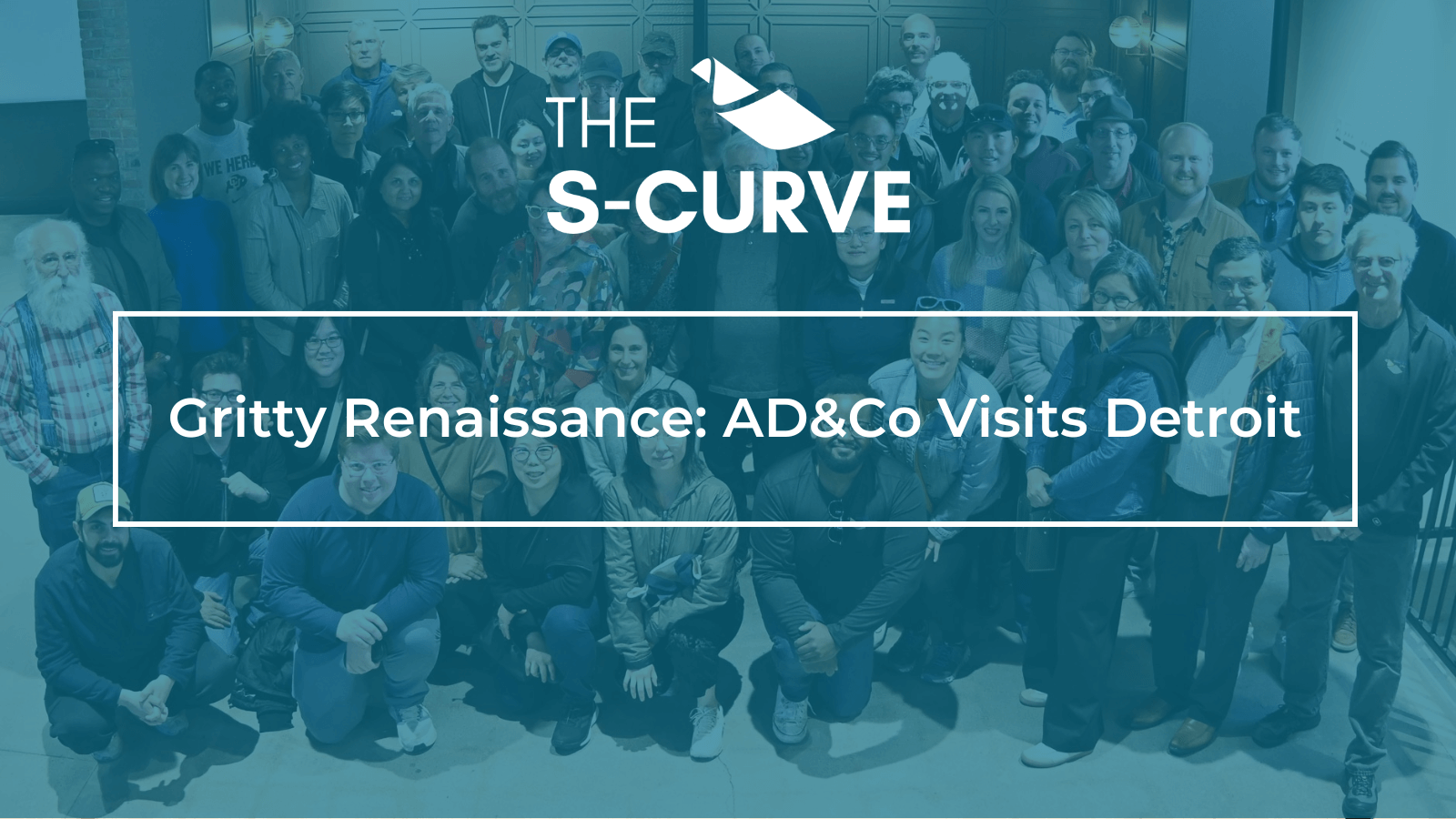
AD&Co held our annual employee meeting in Detroit, Michigan. In addition to gathering everyone in person to socialize and strategize, we use these annual meetings to learn about different cities, especially with regard to housing market dynamics.
We chose Detroit because the oft-maligned city is undergoing a significant renaissance, and we wanted to explore the area and learn how housing may have played a role in both Detroit’s decline and rebirth.
From the early 1900s through the mid-1960s, Detroit was an industrial and innovation powerhouse. Beyond automobiles, the southeastern Michigan area attracted new residents with jobs in everything from heavy industry to machine shops to transportation.
Detroit has always had a substantial share of single-family houses compared to other industrial hubs, which relied more on high-density multifamily housing. While homeownership rates were generally high, opportunities were not evenly dispersed, as racial redlining led to largely segregated neighborhoods and lower homeownership rates among blacks and ethnic minorities. Although redlining was common in the first half of the 20th century in many large American cities, Michigan set itself apart. Its Home Rule Act allowed a great deal of self-governance by small cities leading to the creation of dozens of very small towns, all with different public services and both subtle and overt discriminatory policies. The Home Rule Act also allowed large companies to heavily influence local taxation policy and effectively create low tax havens in small towns, thus starving the greater Detroit area of tax revenue.
Detroit started facing significant troubles in the late 1960s, as the 1967 race riots led to significant white flight. The OPEC embargo in the early 1970’s increased oil prices and opened the door to more fuel-efficient foreign competitors in auto manufacturing. The city’s decline began with significant population loss due to both unemployment and migration to suburban areas, resulting in deterioration of inner-city housing stock and severe underfunding of public services such as police, fire protection and education.
Long known for its grit and determination, Detroit started to come back in the 1990s and early 2000s as the auto industry recovered. However, much of that progress was lost during the Great Recession due to predatory lending and the second collapse of American automakers. Many large blocks of the inner city were left with only one or two houses standing, and arson for insurance money plagued the housing stock.
However, Detroit’s revival in the past ten years proved even bigger than all of its setbacks. The Lions, Tigers, Red Wings, and Pistons now all have their venues within easy walking distance of the revitalized downtown business and entertainment district. The city built a new riverfront parkway and renovated parks. Downtown has incredible energy once again, with bustling businesses and residential towers going up, not to mention the burgeoning art scene popping up in multiple locations.
Laura Grannemann, Executive Director, Rocket Community Fund & Gilbert Family Foundation, gave an overview of the organizations' endeavors in the community. As one of the nation’s largest mortgage lenders, their Detroit Home Repair Fund and Detroit Tax Relief Fund work to head off displacement through preventing tax foreclosure and eviction.
Detroit still faces many challenges, particularly in those neighborhoods hit hardest by out-migration, foreclosures, and underinvestment in city services. Wealth and influence remain highly concentrated, and the Home Rule Act micro towns remain an impediment to healthy Detroit finances and provision of basic services. Despite this, we found encouraging pockets of home-grown revitalization. Jeanette Pierce, president of City Institute, showed us how hyper-local organizing is bringing growth and renewal without troublesome gentrification and displacement. We met leaders from organizations such as the Southwest Detroit Business Association, Capital Impact Partners, and Live6 Alliance that advocate for fair housing and community engagement. Keeping people in the neighborhoods that multiple generations have called home is a hallmark of these local initiatives. Tactical rezoning has helped overcome some of the obstacles to development presented by Detroit’s traditional focus on detached single-family housing.
The team also met Ike Blessitt, who personifies Detroit’s gritty reputation. Ike grew up in Hamtramck, one of the Home Rule Act towns completely surrounded by Detroit. As a four-sport high school star athlete, Ike attracted the attention of Detroit Tigers scouts and eventually made it to the major leagues with the 1972 Tigers. Today, even as a 76-year-old double amputee, Ike has continued his 15 years of teaching individuals, aged 6 to 60, how to play baseball. Like the development efforts, Ike keeps it local to help inner-city kids by building a complete baseball training facility in his Detroit backyard. The Ike Blessitt Sports Academy attracts kids from throughout Detroit.
We came away from Detroit with a real appreciation for the daily challenges its residents overcome through innovation and community organizing. The lively sports and entertainment district will surprise new visitors, but digging deeper into the neighborhoods will show that this renaissance is just getting started.
-
 Introducing MARS+ as the Next Generation of Mortgage Analysis and Reporting SystemProducts
Andrew Davidson & Co., Inc (AD&Co) is pleased to announce the beta release of MARS+, the next generation of Mortgage Analysis & Reporting System (MARS), which has been in use since 2008 for performance reporting of AD&Co models. MARS+ aims to provide enhanced and advanced capabilities and features for mortgage analysis and reporting.
The new enhancements of MARS+ include:
- Simplified access to AD&Co models and data from a single page
- Enhanced filtering and stratification of back-testing data
- Distribution of data for key mortgage data analysis parameters
- Model performance visualization and tabular display for selected data of interest
- Customizable dashboards for effective reporting of actual and model results along with data characteristics
In what follows, we summarize how to use the various capabilities and features of MARS+.
Selecting, Filtering, and Stratifying Data of Interest
The initial screen of MARS+ labeled as ‘Model & Data’ provides user interface components that are grouped into three categories: (1) Model & Data Inputs, (2) Filters, and (3) Stratification.
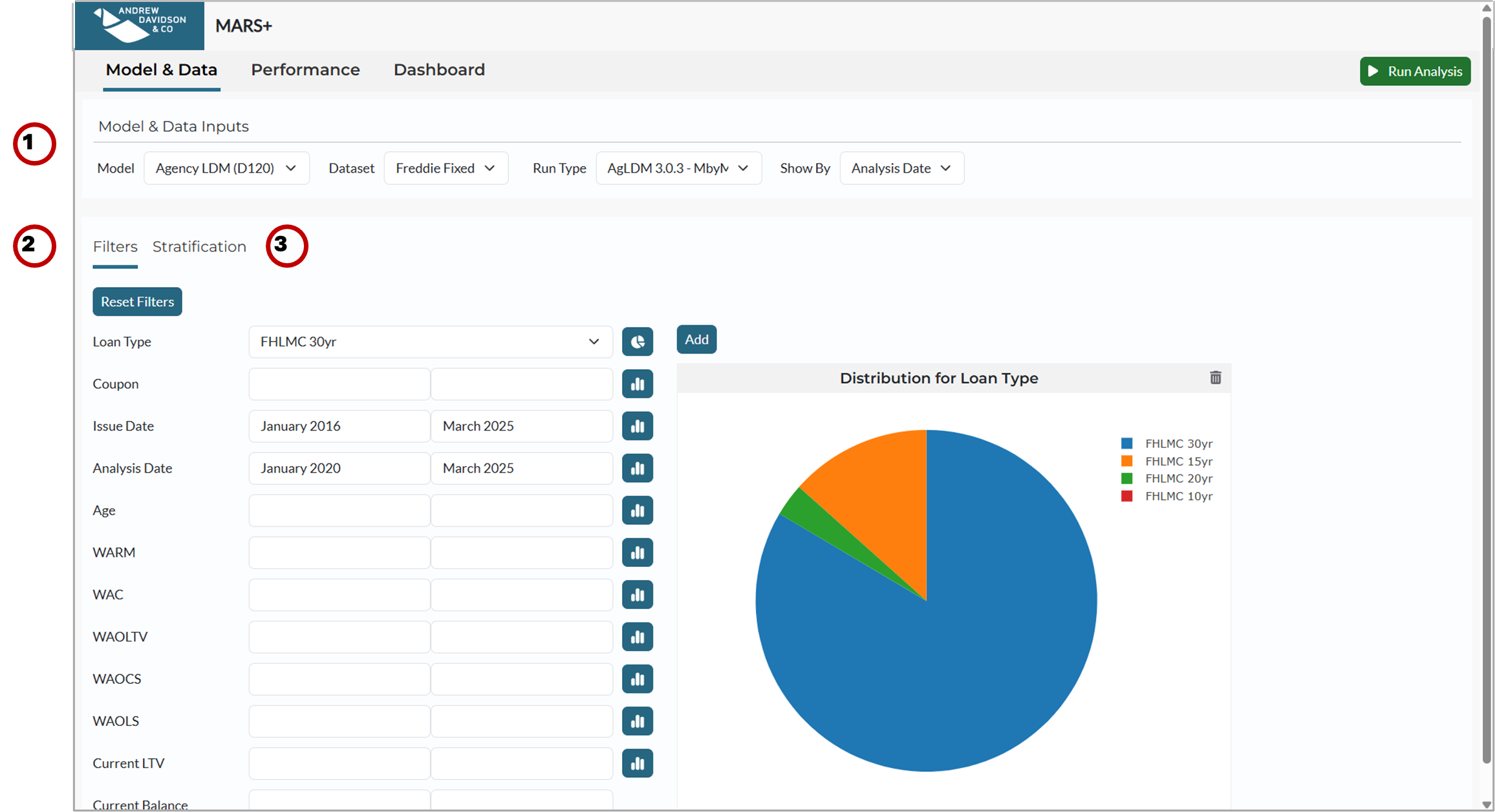
For selected filter and stratification data parameters, the ‘Model & Data’ panel also provides a distribution icon to the right of each filter and the parameter selected for stratification. Upon clicking on a distribution icon, the distribution of the selected data parameter is displayed as a pie chart or a bar chart to the right of filters or stratification bucket definitions.
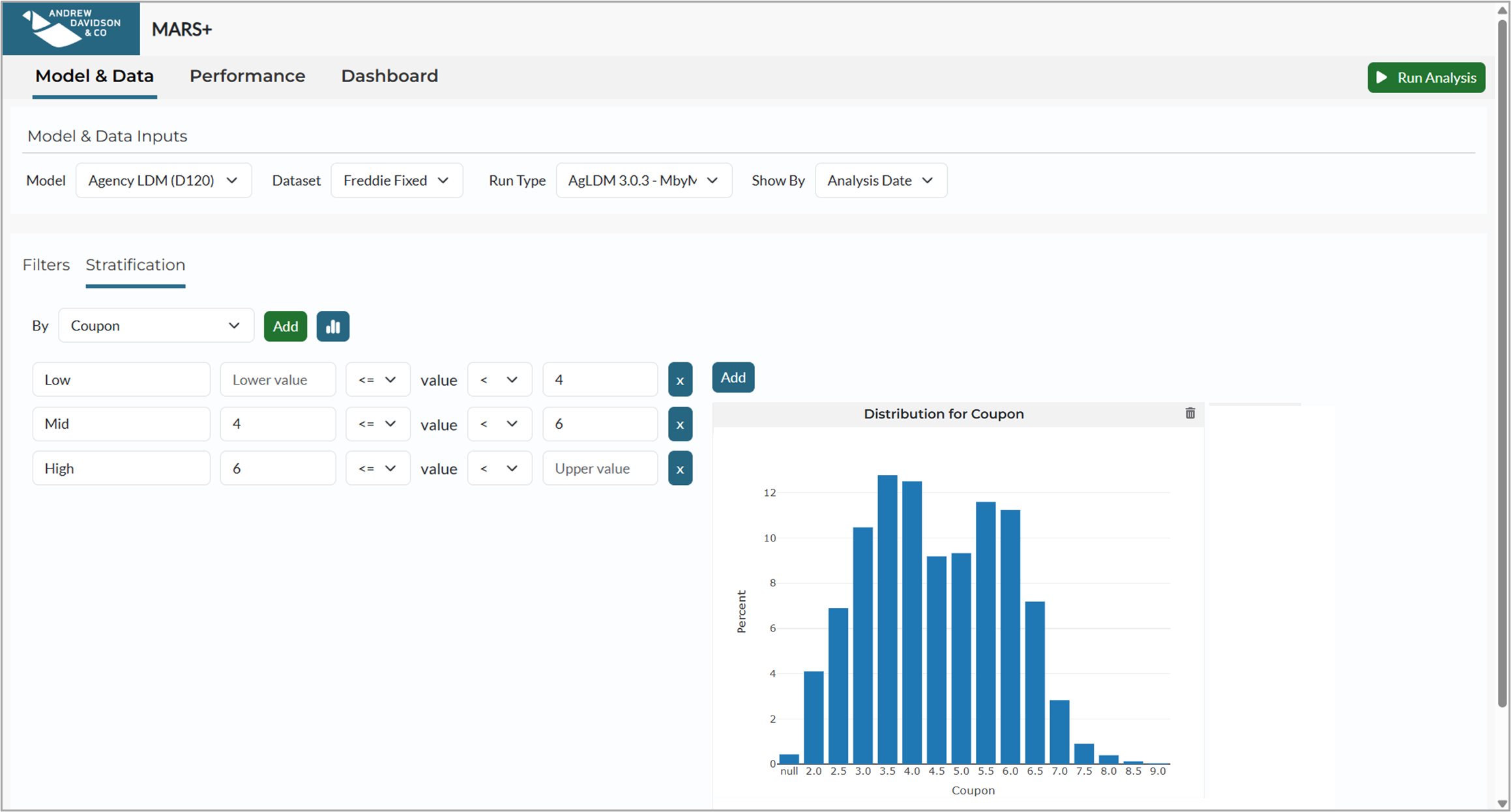
Any distribution chart shown in the ‘Filters’ and ‘Stratification’ panels can also be added to a dashboard to save it for future use, like re-using and continuing the analysis later or for reporting purposes.
Once the data of interest has been defined in ‘Model & Data Inputs,’ ‘Filters,’ and ‘Stratification,’ clicking the ‘Run Analysis’ button will start the retrieval of actual and pre-calculated model data, and display both actual, that is, historical back-testing data and model results for comparison.
Performance Results
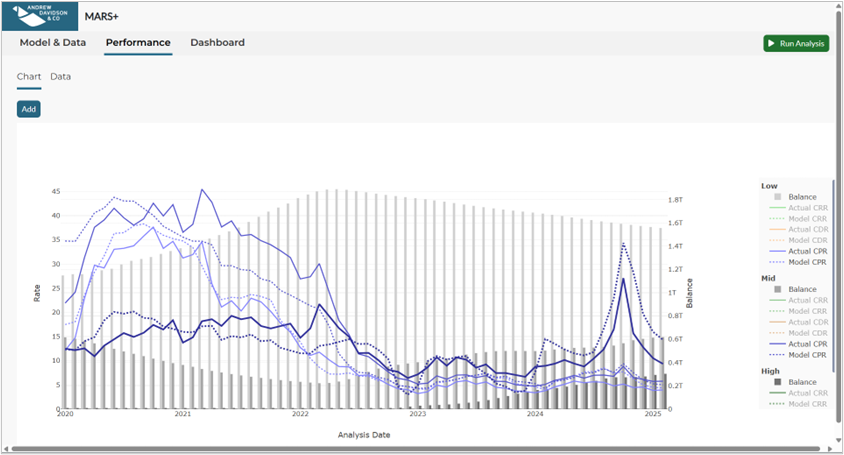
The ‘Performance’ panel displays both actual and model results in an aggregated and stratified form in terms of an interactive chart and a data table as shown in the screenshot below.
While the default chart view typically displays a few parameters, like CPR and Balance, the view parameters can be selected or de-selected from the chart legend.
Any chart or data table viewed in the ‘Performance’ panel can also be added to an existing or a new dashboard to save it for later use.
Dashboard Views
MARS+ provides its users with the facilities to create several dashboards as needed and save them in their local browser’s storage. A dashboard can have up to four components, including user-selected charts and tables generated during the user’s MARS+ session. The following is a sample dashboard with four components that are generated from an analysis run based on selections, filtering, and stratification done in each of the sample screenshots above.
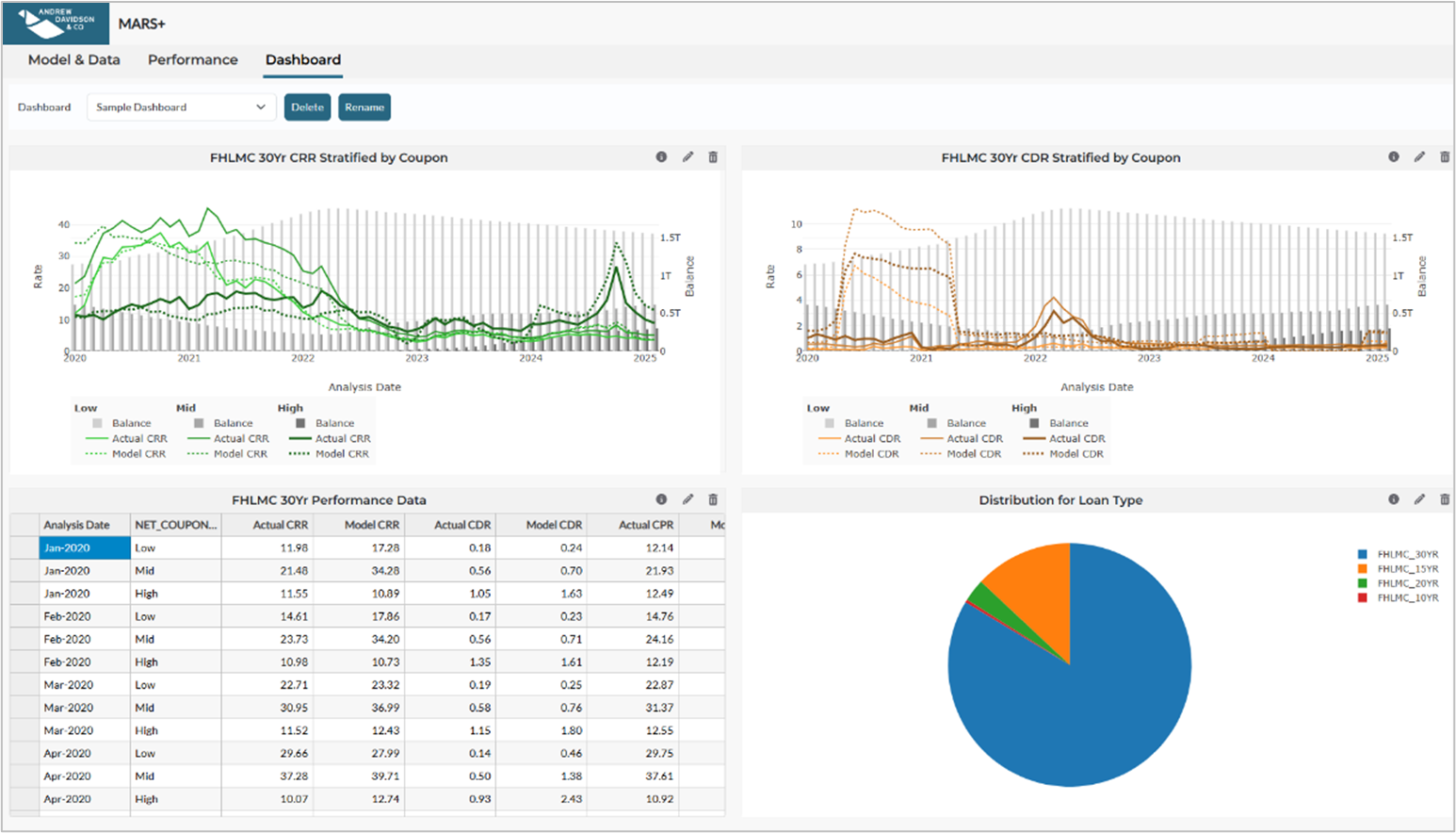
Each dashboard component can also be edited, deleted, or moved within the dashboard.
What is next?
MARS+ will evolve during the beta period in terms of its capabilities, features, and data coverage based on the feedback we receive from our clients and users as ideas, suggestions, questions, issues, and requests. There are also a few planned improvements that we would like to implement during the beta period, including but not limited to:
- Extending the data distributions covering all mortgage data used by our models
- Providing data distribution charts for user-selected dates
- Developing a persistent and secure server-side storage infrastructure enabling users to re-use saved filters, stratifications, and dashboards with original as well as updated data
- Providing additional chart types to display residuals as well as model forecasts beyond the historical back-testing data
Please contact us at support@ad-co.com with any feedback you may have, including your ideas, suggestions, questions, issues, and requests.
-
 SFVegas 2025: Collage of AD&Co PerspectivesEvents
Several AD&Co employees attended SFVegas 2025. This post shares their unique perspectives from attending the conference and key takeaways from the sessions.
Panel on Climate Risk & Property Valuation (Eknath Belbase)
We started with a discussion of physical and transition risks and how they are related to climate change and quickly moved into how these risks may impact property values and mortgage markets. This portion of the discussion focused on the availability and price of insurance, its potential impact on property valuation and borrower behavior, what is starting to be observed in the data and how this data may evolve in the next couple of years.
The final third of our time was spent on efforts to model these behaviors and the potential for originators and others with access to property and loan-level data to incorporate forward-looking climate risk models into their pricing and risk management decisions. A natural question was how those downstream without access to this personally identifiable information (PII) could model securities with this embedded risk, the potential for market disruption given this informational asymmetry and ideas to get around this issue (how to supply climate risk information to security investors without compromising borrower privacy protections).
Tech Odyssey: PoolKinetics (Laura Silberg)
Rob and I were pleased to have the opportunity to present AD&Co’s PoolKinetics from AD&Co’s latest Kinetics product line during the Tech Odyssey session in the Exhibition Hall at SFVegas.
Employing AD&Co’s LoanDynamics Model, OAS Subroutine and MacroDynamics Models for interest rates, home prices, and unemployment, PoolKinetics is designed to price and analyze the pay-up of specified pools relative to TBAs. Users provide pool characteristics such as loan size, LTV, geography, and credit score, which are critical inputs to model prepayment protection embedded in specified pools.
While AD&Co models are also available through many of our third-party vendor platforms, PoolKinetics is a complete front-to-back-end solution that is robust, flexible, and scalable. It can be integrated using a REST API into internal systems, with user-management and analyses-sharing across teams and a customizable web and desktop user interface.
Contact us to take PoolKinetics for a test drive or for more information.
First Time at SFVegas (Aidan Loftus)
This was my first experience at SFVegas and first conference with AD&Co. Having only been with AD&Co for around 15 months, I was anxious but still thrilled to be able to attend such a highly renowned financial conference. Despite getting lost on my way to the exhibit hall, I finally found the booth and received a warm welcome from my AD&Co teammates, and I knew I would be just fine.
Over the next few days, I was able to interact with some of our current clients and prospects. Every conversation was warm, friendly, and full of enthusiasm for AD&Co and the model solutions that we offer. It was great to finally put a face to some of our vendor partners that I have worked with over the past year. Likewise, it was terrific to network and meet new faces, while learning about their companies’ different products and solutions. The sessions I attended were informative, and I always walked away having learned something significant. A session on EU Securitization and Regulation piqued my interest, as I had very little knowledge of the subject matter. It was insightful to hear the discussion and compare it to the current effort in the United States and GSE reform.
Through all of this, I was able to catch up with my AD&Co team members, and have meaningful conversations about lives, work, and my first experience being at this conference. It was truly great to build camaraderie, and I was so happy that I was able to attend my first-ever conference with the AD&Co team.
A Theme of Uncertainty (Joni Baker)
This was my first time attending SFVegas, and I thoroughly enjoyed the energy, comradery, learning experiences, and market overviews that were shared. In addition to panels on topics such as Student Loan ABS, Agency MBS, and the effect of climate risk on property valuation, I also attended a fascinating talk by Sean Carroll on the Origins of Complexity in the Universe, in which he discussed complexity, entropy, and the surprising ways in which they are related and evolve over time. The Plenary: Macroeconomic & Geopolitical Outlook and Macro-Political Plenary sessions were both highly interesting but more immediate and sobering than the eventual fizzling out of our universe. The general sentiment was that the U.S. economy currently has a lot of uncertainty (“the word of the year”). Still, while panelists’ views generally varied on the details, I didn’t hear anyone who thought that 2025 would be a boom period. Growth will not come from house prices (since house prices are already high), labor force growth (due to immigration restrictions), the public sector (state and local cuts are likely to follow the Federal cuts), or consumers who already have cost fatigue before feeling the effect of any tariffs enacted.
Meanwhile, several deadlines are coming up regarding government funding (now delayed to later in 2025), the debt ceiling, and the expiring 2017 tax cuts. One panelist pointed out that Congress seems to be taking things day by day, with no master plan. It was hypothesized that ultimately, they will end up spending more and adding to the deficit, since this is the “path of least resistance” for fulfilling campaign promises.
Some speakers, seeing Biden’s tenure as a time of government overreach, seemed generally in favor of lifting some regulations to ease business, but not via the current haphazard “deregulation by layoffs” being effected by the Department of Government Efficiency (DOGE). Finally, another source of uncertainty is whether the GSEs will leave conservatorship, a complicated endeavor that must be done in a way that preserves the value and liquidity of MBS. I appreciated the overview and insights offered by the panelists at SFVegas, but at the same time, it was a welcome relief to return to the exhibit hall, engage with other conference attendees, and watch the Jenga game of the century taking place at the booth across from ours. I’m looking forward to my next SFVegas!
Now an SFA Veteran (Sam Sutton)
This year marks my very first experience at SFVegas and my first conference while being a part of AD&Co. Some initial feelings included being immensely lost between the vastness of the conference setting and the uniformity of suits surrounding me. However, much of this felt alleviated after finding my team and fully taking in the scope of this conference. The relief brings me back full circle from when I started my journey at the firm. I had my worries and doubts about being able to fit in as a Computer Science major and having zero background in Economics or Structured Finance. In a little over two years, however, my time at AD&Co has reminded me that we do not conform to the norm or status quo when it comes to how we show up.
I thoroughly enjoyed representing AD&Co, almost to the point of pride when realizing SFVegas is such a grand stage with numerous big players recognizing our name and work. Some of my notable interactions included one of the founders of Risk Span, as well as a Chief Strategist for Bloomberg Intelligence. This provided me with a very expansive view of clients and stakeholders to network with, as this has become very scarce in my professional life as of late. The hot topic this year revolved around GSE reform and the potential outcomes of privatization via the current Presidential administration. Hearing one of our very own (Richard Cooperstein) share their thoughts on how these entities representing public utilities should be used in favor of the greater public good versus the private good, it felt reassuring that I share a commitment to this industry with like-minded individuals.
Additionally, I had the pleasure of attending a few sessions on the prominence and implementation of AI in Structured Finance spaces. Mary Purk of Wharton was one of the speakers and single-handedly shifted my perception of AI to a more positive outlook (as it was mentioned in this talk that AI could be viewed either as “A component, or a competitor”). I am happy that I found the chance to learn, network, and participate in team building that reiterates why my experience at AD&Co continues to be irreplaceable. I look forward to joining the fun for another year!
Panel on MBS and Client Meetings (Richard Cooperstein)
I spoke on a panel of experts about the market for Mortgage-Backed Securities. Rather than focus on the technicals and risks of the MBS market, we spent more time on the public discussions of privatizing the GSEs. The general view was that the confidence, efficiency and liquidity of the MBS (GSE and GNMA) markets were all extremely high. Any plan to privatize these “financial market utilities” must be extremely careful not to undermine global confidence in the federal backstop or any of the methods that make the UMBS so liquid and tradable.
A theme of our discussions was the availability of new data that can improve risk and value assessments of mortgage-related assets. These data assets include property-specific climate data and expanded and improved consumer credit data. We hope to explore ways to bring these data and enhanced models into the mainstream of the mortgage ecosystem.
-
 Now Available: AD&Co’s Quantitative PerspectivesThoughts
We’re excited to announce our latest Quantitative Perspectives providing in-depth insights into current market trends and advanced valuation techniques. This publication offers valuable information for mortgage market participants and those involved in credit risk transfer transactions.
Climate-Conditioned LoanDynamics Model (ccLDM)
Eknath Belbase introduces the integration of climate risk into our analytical framework. Building on previous work, he explores how our LoanDynamics Model (LDM) has evolved to account for climate-related factors, adjusting prepayment and default probabilities. Climate-conditioned versions of LDM and House Price Appreciation (HPA) model are now integrated into our LoanKinetics (LK) tool and OAS subroutine, available for use. This paper focuses on the advancements in our prepayment, default, and severity models to better capture climate risk. Click below to read the full paper.
This paper will be a valuable resource for your work. A login is required for access. If you have any questions or would like to discuss the content in more detail, please contact support@ad-co.com.
-
 AD&Conversations: Is the New "New Normal" the Old Normal? Understanding Mortgage RatesPodcast
Tune in to Laura Silberg's interview with Andrew Davidson, Eknath Belbase and Alex Levin as they discuss their latest Quantitative Perspectives, our independent commentary series, titled Is the New "New Normal" the Old Normal? Understanding Mortgage Rates.
In this discussion, they explore why mortgage rates have not followed the expected path after the Fed’s easing cycle and what factors may drive future rate movements. They offer a long-term perspective, and discuss how mortgage rates differ from Treasury rates. What constitutes a "normal" mortgage rate?To access the Quantitative Perspectives article, click here. Login is required.
The S-Curve Archives
-
Thoughts
Separating signal from noise is at the heart of what we do at AD&Co. One of the key tools we utilize for that purpose is a sophisticated set of model performance trigger reports. These monthly reports not only alert us to model drift but also point to possible causes for the drift.
-
News
Andrew Davidson & Co., Inc. (AD&Co), is proud to support Fite Analytics’ innovative cloud-native Mortgage-Backed Securities Analytics Service. The Fite Analytics solution incorporates AD&Co’s LoanDynamics models that provide forecasts of voluntary prepayments, defaults and losses that drive risk analytics across the mortgage-backed securities market with comprehensive coverage.
-
News
We are thrilled to announce that Andrew Davidson & Co., Inc. has launched a new look for ad-co.com. Some of the exciting new features of this site include:
-
A dynamic homepage highlighting the firm’s latest innovations, AD&Co client benefits, announcements, and Diversity, Equity and Inclusion efforts.
-