

Welcome to The S-Curve
Now you will be able to receive the latest announcements, product updates, and our insights on the mortgage market in real time.
The name of the blog, the S-Curve, is a reflection of our logo and the central feature of our prepayment model. S-curves are seen in nature in many phenomenon, from population growth to prepayment and default models. Our first S-curve, in the early 1990s, used the arctangent function, then piece-wise linear functions, and evolved over time to be more complex and vary by FICO, loan size and LTV. This evolution encapsulates both the timeless nature of fundamental relationships and constant innovation to describe them better over time.
We hope you find the information useful and we look forward to your feedback.
-
 Overview of Going to Extremes: Climate, Housing and FinanceEvents
Andy and I recently attended AmeriCatalyst ‘Going to Extremes’ Climate, Housing and Finance Leadership Summit in Washington, D.C., a fantastic conference on all things related to climate risk and the housing ecosystem. While going over all the great speakers and broad expertise represented there would take a novella, I want to connect a few key ideas discussed there to our ongoing efforts in this area.
Panels on climate and property level data and on the modeling that can be done with this data generally came to an agreement that we are getting to a point where property level impacts of increasing climate risk can begin to be measured using traditional mortgage risk metrics that practitioners are familiar with once climate-conditioning of behavioral and house price models is complete. Prior to this conference, we noticed a focus primarily on event-driven analysis, and I detected a general consensus emerging that the rapid rises in insurance cost (and drop of availability in cases where states interfere with rational price setting) ought to become our primary analytical input.
A related emerging idea is that the duration mismatch between the 1-year repricing of insurance and the 30-year fixed rate mortgage creates substantial risk (this was one of the key points of Andy’s presentation).
One speaker noted that this phenomenon is very similar to the financial crisis, where the industry created 2/28 adjustable-rate mortgages (ARMs) where the teaser was affordable, only to have them blow up 2-3 years later; now the teasers are insurance policies that go from being 20% of total principal, interest, taxes and insurance (PITI) to 60% of a much higher PITI within 3 years.
We are fortunate that, at this time, most borrowers have substantial amounts of equity. While the evolution of 3- or 5-year forward insurance pricing, combined with longer-term forecasts based on the best available climate risk models that would allow borrowers to avoid the riskiest areas could go a long way towards preventing a repeat of what happened with 2/28 ARMs , such developments are not underway. In fact, the risk from higher insurance premiums is potentially higher than the 2/28 ARMs risk (since everyone with a mortgage is subject to insurance repricing risk), and at least a fifth of core-based statistical areas (CBSAs) seem to have at least 10% of their properties in risky enough areas that insurance affordability will become a concern).
Discussions on mitigation and hardening highlighted some solutions: apart from getting to net zero and using carbon capture to reduce existing CO2 (global solutions), we can broadly do two sets of things: avoid the riskiest areas and make somewhat risky areas less risky by hardening our housing and infrastructure. More modern building code standards (which have been updated to account for changing climate conditions) and property level mitigation on existing housing stock, together with local infrastructure resiliency, can reduce the severity of events enough to mitigate future required insurance premium increases.
Another idea that came up in an interview that the journalist Diana Olick conducted on stage at the conference – that in searching for solutions and contributions to solutions, we “should not let the perfect be the enemy of the good,” which connects with our efforts in at least two ways. First, it is a good modeling philosophy to have: if we wait for the perfect model before releasing it to the market, we can end up waiting needlessly. By releasing something that is “good enough” to get started, we engage with the user community and begin the process of improving our models much earlier. Our clients begin to think about use cases and ways to improve their business practices much sooner.
Second, all of our efforts broadly help our clients avoid, manage and appropriately price the risk. A vision of perfection might entail coming up with solutions that not only shift the risk among market participants but solve systemic issues that impact the entire mortgage ecosystem. The problem with this vision of perfection is that systemic solutions require the participation of many different players: companies, regulators and multiple layers of government. We can seek to both help our clients begin to manage this risk in the near term and begin to work with the larger community on system-wide solutions in the intermediate and long term. The conference did not achieve a clear consensus on system-wide solutions but clarified the extent of the problems and laid out a menu of incremental steps, each of which could contribute to solutions.
-
 Mortgage Weather Hazard Risk: A Three Body ProblemEvents
At the recent AmeriCatalyst ‘Going to Extremes’ Climate, Housing and Finance Leadership Summit, I presented a session on how risks related to weather-related losses impact the housing finance system.
Until recently, weather-related losses were almost fully segmented from the risks borne by investors in mortgages and mortgage-backed securities. Most mortgages require that borrowers retain property insurance, so mortgage investors for the most part assumed that insurance or government assistance would cover property damage and protect the value of the mortgage collateral.
A few large weather events such as hurricanes Katrina, Irma and Sandy as well as wildfires in California led the mortgage market to recognize that delinquency immediately following a major weather event may not be indicative of a borrower’s ability to make mortgage payments over longer time horizons. Thus, the mortgage market introduced more flexible forbearance for weather-related delinquencies. Still, mortgage investors assumed, for the most part, that homes would be insured and weather-related losses would be small and easily diversified.
The recent spate of insurance firms exiting property insurance markets in Florida and California and rapid increases in premiums for borrowers who can purchase insurance has raised the specter that mortgages may be exposed to weather-related losses and that fewer homes may be eligible for mortgage financing.
While the structure of the housing finance system is quite complex, the issues associated with weather-related losses can be understood by focusing on three main players.
- The Borrower
- The Lender
- The Property Insurer
The Borrower seeks leverage and stable cost of housing and is willing to take on long-term risk of changes in the value of the home and maintenance cost. Borrowers often do not have the resources to cover significant damage to their homes or sustained loss of employment income. Risk management is to default on the loan if they do not have sufficient income and the home value declines below the amount of the loan
The Property Insurer is willing to take on diversified hazard risks in exchange for an actuarially sound premium. When there are losses, the borrower/homeowner files a claim and is reimbursed for the costs to restore the home. Insurance is provided on an annual basis, and the insurer has no obligation to keep prices the same or renew insurance. Risk management for the insurer is annual repricing or withdrawal from a market if regulators do not allow them to charge the premiums they request.
The Lender is seeking investments that exceed their cost of funds. The mortgage market is willing to provide funding and take on interest rate/prepayment risk. The market has various mechanisms to cover and distribute credit risk, many of which involve segmenting the various risks to investors with specific investment objectives. Risk management for non-payment by the borrower in the mortgage market is foreclosure. Thus, the mortgage market cannot provide stable homeownership for weather-related losses and generally, mortgage investors are not interested in taking on property hazard risks. As a result, the mortgage market uses “forced place insurance” when a borrower’s property insurance lapses or is not renewed.
There are roughly $13 trillion of mortgages outstanding in the US. These generate approximately $900 billion of annual payments of principal and interest. Of that amount, approximately $60 billion, or about 50 basis points per year, goes to the providers of credit guarantees like FHA, Fannie Mae and Freddie Mac and private insurance. Coincidently, the amount of homeowners’ insurance premiums is in the same ballpark as the guarantee fees, with the median issuance premium around 40 basis points on the replacement value of the structure. The value of the loan and the value of the structure both represent somewhere around 50% to 70% of the total value of the property.
Both insurance and mortgages provide stability for home ownership and allow borrowers to shed risks that would otherwise make homeownership unstable and unaffordable.
While both mortgage guarantee fees and property insurance are designed to cover losses, the mechanism for addressing losses is very different. Insurance provides money to the homeowner to continue living in the house, while guarantee fees are used to cover losses associated with foreclosure, that is, removing the owner from the house.
Mortgages serve to provide borrowers with long-term stability in the cost of homeownership. Property insurance, on the other hand, does not provide long-term stability as insurance is repriced annually and firms that are unable to operate profitably due to inability to adjust premiums to current levels of loss exit the market.
The change in the costs of property insurance due to more frequent weather events has upset the functioning of the housing finance system. Increased insurance costs and the potential for unavailable insurance have the potential to shift the risk of weather events to the mortgage market and the mortgage credit guarantees. However, the mechanism of the mortgage market to address losses, that is, foreclosure, is not suited to the problem of properties needing repairs to be livable.
Even if insurance is available, rapid increases in the cost of insurance may cause borrowers to default on loans when they can no longer afford the mortgage payments and the increased insurance costs. Additionally, higher insurance costs may decrease the value of homes, increasing the frequency and severity of loss.
Moreover, insurance that merely covers losses may be a disservice to the borrower and their communities. Houses that are restored, possibly to updated building codes, may still be subject to future losses and unaffordable insurance. Money spent on higher insurance premiums is money not spent on making properties and communities more resilient.
As mentioned earlier, one bright spot has been that the mortgage market has recognized that forbearance is a better solution for borrowers who are delinquent on their loans due to weather-related disruptions. And that often by waiting for the borrower to receive insurance payments or otherwise find financing for repairs, foreclosure and the associated losses can be avoided.
While the mortgage market can accommodate some degree of loss from weather events, we believe that it would be better to recognize the need to restructure the delivery of property insurance and find a solution that provides longer-term certainty for property insurance to the borrower and avoid the use of foreclosure as a method of addressing weather-related loss.
-
 Agency LDM+ Available in Milliman M-PIRe™Products
Andrew Davidson & Co., Inc (AD&Co) is thrilled to announce an expanding relationship with a Third-Party Vendor! AD&Co enjoys working with countless analytical providers to offer our clients seamless solutions and we would like to welcome Milliman M-PIRe™ to the team!
Milliman’s Integrate Solutions have supported AD&Co’s LoanDynamics Model (LDM) for many years. We've expanded on that relationship to include Milliman M-PIRe™ software. Milliman M-PIRe™ now supports AD&Co’s Agency+ LoanDynamics Model (Agency LDM+) to offer clients an industry-leading solution. AD&Co’s Agency LDM+ forecasts prepayments, delinquencies, defaults and loss probabilities, which are fed into Milliman M-PIRe™, a valuation and securitization software that produces advanced analytics of structured mortgage credit risk (CRT).
Today’s financial markets have taught us the importance of evaluating and managing financial risks. Milliman’s integration of AD&Co’s Agency LDM+ into the M-PIRe™ solution allows reinsurers and mortgage insurers to analyze CRT transactions using a multi-model framework when implementing risk and portfolio management strategies.
AD&Co would like to thank Milliman for their unparalleled support of our Agency LDM+ in the M-PIRe™ software. We truly appreciate their dedication to servicing mutual clients to ensure their success.
Interested in learning more about joint Milliman M-PIRe™ and Agency LDM+ solution? Please contact Jonathan Glowacki at jonathan.glowacki@milliman.com.
-
 Federal Home Loan Bank of San Francisco's Innovations in Mortgage Finance SymposiumEvents
The Federal Home Loan Bank of San Francisco directed the Urban Institute to develop innovative and actionable ideas to close the gap between white and black homeownership rates, which is as wide today as before the Fair Housing Act, enacted 60 years ago. Homeownership is crucial to a fairer society because working and middle-class families most commonly create inter-generational wealth by owning homes with amortizing mortgages. Urban Institute’s eighteen-month effort culminated in a symposium in February in Los Angeles attended by dozens of housing experts. The Borrowers Mutual Escrow Fund (BMEF), which I developed a few years ago, was included in the Urban Institute study, and I was invited to discuss it at the symposium.
A few key themes emerged from the symposium. One centers around replacing decades-old credit scores with modern metrics that better reflect borrower financial condition as the consumer financial footprint has become increasingly digitized, especially among minority populations. These metrics generally extend beyond traditional credit profiles to include other important measures of borrower financial condition such as digitized cash flow data, telecom/utility data and others. A fair amount of evidence already shows that modernized metrics assess homeownership readiness much better than old ones. Reducing uncertainty reduces cost.
Another theme that includes the BMEF, is that when trying to expand homeownership, liquidity and cash flow stability can be more critical to the success of marginal borrowers than traditional credit scores and down payments. Conscientious borrowers generally strive to restart paying their mortgages after short delinquencies if given the chance. Empirical support for this view includes delinquency performance through repeated climate events (e.g., hurricanes and floods) and the success of generalized forbearance during the COVID-19 pandemic.
This has turned decades of loss mitigation wisdom on its head. The Massachusetts state mortgage insurance program has included unemployment benefits for almost 20 years to resounding success. This program provides borrowers with fragile liquidity and volatile income, with a few months of payment reserves between jobs (e.g., consistently succeeds in preventing delinquency even through the financial crisis of 2007 and the COVID-19 pandemic). The GSEs and FHA have now made forbearance their initial loss mitigation response to borrower delinquency.
The BMEF proposes that borrowers put 3% of their house value into an administered escrow account instead of towards a down payment. It’s well-known that reserves are crucial to borrower success and placing reserves into escrow to be used for income interruption or unexpected maintenance will make reserves even more effective. Money in such accounts will always reduce risk compared with small down payments for borrowers, servicers, mortgage insurers and guarantors. This is provably true because the escrow funds are very liquid for payments, while the liquidity value of small down payments is effectively zero. Further evidence is that reperformance rates for delinquent borrowers are higher for borrowers with lower credit scores than for those with higher credit scores.
Borrowers pay mortgage insurance and guarantee fees to compensate insurers for risk, but it does not impact borrower ability to pay. By contrast, putting aside borrower funds for financial stress reduces risk throughout the value chain. Since it is borrower money in the first place, no subsidy is needed, but risk declines because liquidity is improved. Finally, borrower escrows managed by servicers for taxes and insurance are individual. However, BMEF escrows can be combined across borrowers to generate large diversification gains. Even among traditionally risky borrowers, perhaps 75% of them will never become delinquent, so it’s likely that the benefit limit can exceed the average contribution.
-
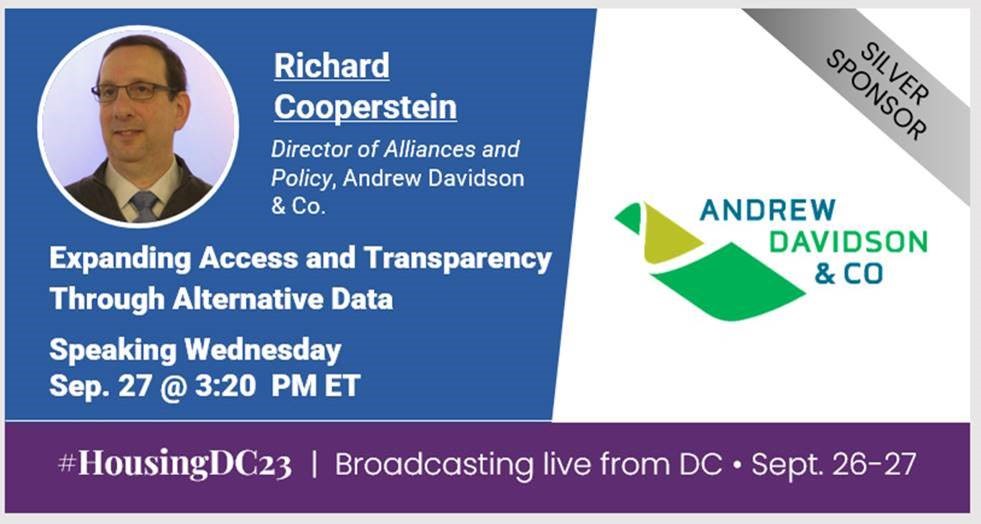 Mortgage Data Exchange Presentation at #HousingDC23Events
The Data Foundation of Mortgage Finance
Homeownership is the largest source of wealth accumulation and inter-generational wealth transfer for the working and middle class. However, the non-interest cost of financing is always an obstacle for first-time and low-wealth buyers, and underserved populations.
- How much of the up-front and the ongoing cost of mortgages arise from the cost of data?
- What is a Mortgage Data Exchange, and how does it make the mortgage data market more efficient and reduce the cost of originating, servicing, investing, studying, and regulating mortgage finance?
Join me as I speak on these at the virtual #HousingDC23 on Wednesday, September 27th at 3:30 PM ET on a panel titled “Expanding Access and Transparency Through Alternative Data.”
Click here to watch the session on demand now!
The S-Curve Archives
-
 Thoughts
In this blog post, we used the recently updated Mortgage Market Statistical Annual to examine the dynamics of residential loan origination by state and by market segments and highlight important trends.
-
 Products
Andrew Davidson & Co., Inc. (AD&Co) is pleased to announce the official release of Kinetics v1.10, the latest update to AD&Co’s modular platform for running the AD&Co suite of analytics. This update introduces the Multifamily LoanDynamics Module, the newest way to run Multifamily LoanDynamics Model (LDM). Investors, servicers, insurers and lenders can leverage this new module to better understand the prepayment and credit risk of their multifamily mortgage portfolio.
-
 Events
Andrew Davidson & Co., Inc. (AD&Co) held a webinar on June 8th entitled “Lessons Learned: Insights for Managing the Interest Rate Risk of Banks.” Mickey Storms from our Alliances and Policies team, Alex Levin from our Financial Engineering team and Andrew Davidson were featured speakers.
-
 Products
Andrew Davidson & Co., Inc (AD&Co) is pleased to announce the beta release of a new monthly report series titled “Specified Pool Prepayment Trends,” which aims at showing market prepayment trends for specified agency pools in support of pay-up analyses by investors, traders, and alike.
-
 Products
Andrew Davidson & Co., Inc (AD&Co) is pleased to announce that Polypaths LLC supports AD&Co’s Auto LoanDynamics Model (Auto LDM) providing prepayments, defaults and losses on auto loans and securities.
-
 Events
The Structured Finance Association hosted SFVegas 2023 (February 26 - March 1), a broad capital markets conference with thousands of attendees in Las Vegas. Andrew Davidson & Co. Inc. (AD&Co) was a sponsor focused on the mortgage sector. As we engaged with clients and policy leaders, a few themes emerged: Data, Expanding Access Safely, Ginnie Mae Servicing and Auto Loan Performance.
-
 Products
Andrew Davidson & Co., Inc (AD&Co) is pleased to announce the official release of the LoanDynamics Module in Kinetics, AD&Co's new modular platform for running AD&Co analytics via a desktop application, web browser, or REST API. The LoanDynamics Module is the latest way to run the LoanDynamics Model, allowing users to perform sensitivity analysis, validation testing, and scenario analysis in a modern, user-friendly application.
-
 Thoughts
Recently the Federal Housing Finance Agency (FHFA) announced some upcoming changes related to the use of new credit scores, FICO 10T and VantageScore 4.0 by Fannie Mae and Freddie Mac. “FHFA expects that implementation of FICO 10T and VantageScore 4.0 will be a multiyear effort. Once implemented, lenders will be required to deliver both FICO 10T and VantageScore 4.0 credit scores with each loan sold to the Enterprises”.[1] This announcement will impact the entire mortgage ecosystem.
-
 Thoughts
January is National Mentoring Month which is very appropriate since it coincides with the time when we typically set out our goals and intentions for the New Year. Organizations are embracing mentoring programs and these programs have indeed become a strategic imperative for many. There are many benefits to mentorship and it's easy enough to comprehend. The individuals involved in a mentoring relationship and the organizations that choose to sponsor a mentoring program all are likely to benefit.
-
 Thoughts
Homeownership is the largest source of wealth accumulation and inter-generational wealth transfer for the working and middle class. However, the history of racial discrimination (it was actually legal to discriminate by race in housing until the Fair Housing Act of 1968), suggests that we have a continuing responsibility to ensure fair access to housing and housing finance.